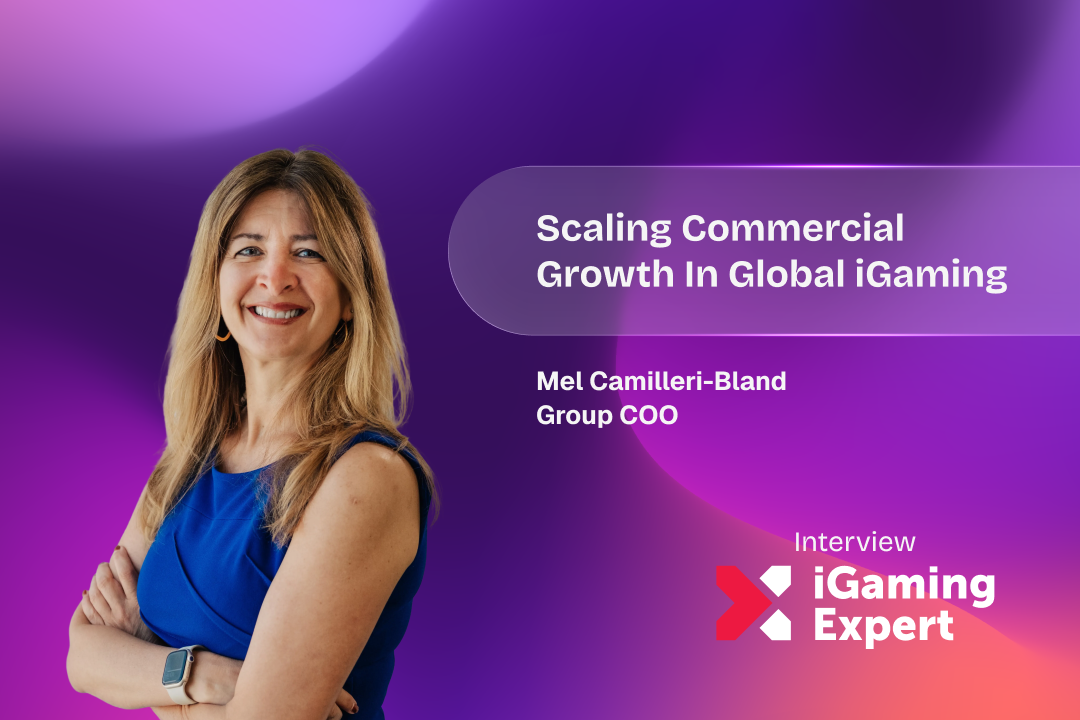
Scaling Commercial Growth in Global iGaming - LCKY Group COO Mel Camilleri-Bland Interview
Scaling Commercial Growth In Global iGaming: Strategy, Partnerships & Market Expansion
With commercial leadership becoming increasingly critical in today’s competitive and regulated iGaming landscape, SBC sat down with LCKY Group COO, Mel Camilleri-Bland, to learn how the business has navigated a fragmented market while driving sustainable growth across key regions.
The iGaming industry continues to evolve across multiple regulated markets. From your perspective, what are the key commercial challenges businesses must navigate in today’s increasingly fragmented landscape?
One of the biggest challenges in iGaming today is operating across multiple regulated markets, each with different rules, timelines, and responsible gaming requirements. What works commercially or legally in one market often doesn’t work in another, so it’s crucial that successful operators build strong central infrastructure across brand, product, payments, and compliance, while also maintaining the ability to swiftly adapt to any local regulations should this be required.
Another major challenge is the growth of grey and black market operators. As regulated markets introduce stricter rules, higher taxes, and tighter affordability checks, some players are drawn to unlicensed alternatives that feature far fewer restrictions. Licensed operators can’t compete by lowering their own standards, so the focus has to be on trust, reliable payments, player safety, and building brands that players genuinely believe in. At the same time, consolidation across the industry is accelerating. Rising compliance costs are making it harder for smaller operators to compete, leading to more mergers and acquisitions that will reshape the competitive landscape.
As Group Chief Operating Officer, how do you approach developing a commercial strategy that not only delivers short-term revenue, but also supports long-term brand strength and sustainable growth?
The key question behind any commercial strategy is whether or not today’s decisions support sustainable growth over the next five years. Short-term revenue can be driven through aggressive acquisition tactics, but in regulated markets, those approaches often create long-term problems.
A scalable strategy therefore needs to be built around the right metrics. Looking at NGR by market, retention rates, and payment acceptance rates gives a clearer picture of long-term performance than simply focusing on deposits or first-time deposit numbers.
The rise of grey and black market operators also changes the competitive approach for a lot of iGaming brands. Licensed businesses can’t compete on fewer restrictions, so they need to win through better products, trustworthy brands, and stronger customer experiences. As such, long-term success can only really be earned by genuinely being better, and not just by being licensed.
At LCKY Group, we’re also selective about where we operate. Expanding into every market can quickly become expensive and inefficient, so for us, the focus is always very much on markets where regulation, product strength, and payment infrastructure create a competitive advantage.
Partnerships are central to success in B2B iGaming. What defines a high-performing partnership for LCKY Group, and how do you ensure these relationships translate into tangible commercial outcomes?
Strong partnerships are built on genuine commercial alignment, not just contracts. In iGaming, relationships with affiliates, payment providers, platforms, and game studios all play a major role in growth – and for LCKY Group, the quality of these relationships matters more than the volume.
For us, all partners need reliable tracking, competitive commercial terms, and confidence in the product that they’re promoting. We prioritise relationships that deliver compliant, high quality traffic, rather than simply chasing scale. Looking specifically at the payments side of things, acceptance rates are critical. Lower processing costs mean little if legitimate player transactions are consistently being declined, so the best partnerships are the ones where both sides understand the intended commercial goals and keep working together to improve performance.
With new markets continuing to regulate and mature, where do you see the biggest opportunities for growth, and what are the key commercial considerations when entering these regions?
Latin America remains one of the biggest current growth opportunities, with several markets regulating or moving toward regulation.
However, entering these markets is rarely straightforward. In many regions, unlicensed operators already have a strong market share and established player habits, and this means that licensed operators are not entering an empty market as such, but are instead competing against businesses with fewer restrictions and lower operating costs.
It’s for this reason that we focus on regulatory groundwork before scaling commercially, so that we can always enter markets properly and begin building for long-term sustainability from Day 1.
Payment localisation is another key factor that is often underestimated here. If players can’t deposit or withdraw easily with a licensed operator, they will quickly move to alternatives that offer a smoother experience, so a strong payment infrastructure has to be in place from the start.
In a crowded and competitive space, differentiation is critical. How is LCKY Group leveraging data, product strategy, or innovation to stand out and drive performance?
The real opportunity in data isn’t collecting more of it, but in using existing data more effectively and faster than your competitors. Understanding player behaviour in real time helps improve retention, reduce friction, and shape better product decisions.
Licensed operators may not be able to match unlicensed competitors on things like RTPs or fewer restrictions, but they can compete through better user experience, personalisation, and trust. Players are more likely to stay loyal when the product feels tailored to them and works seamlessly.
In practice, this means using behavioural insights to deliver the right content and promotions to the right players at the right time. Loyalty programmes, jackpots, and bonus structures should be designed around user engagement and long-term value, not just short-term margin optimisation.
Customer service is also an underrated retention lever. When a player has a problem such as a delayed withdrawal, a bonus query, a verification issue, how that’s resolved determines whether they stay or leave. The best operators treat CS not as a cost centre but as a commercial function. Resolution time, first contact resolution rates, and escalation patterns all tell you something meaningful about product friction and player satisfaction. Fixing those issues upstream, based on what CS sees, is one of the most cost effective retention tools available.
With regulations constantly evolving and grey and black market operators finding new ways to attract players to their sites, what are the biggest considerations that licensed iGaming businesses will need to make if they wish to remain competitive over the next 12-24 months?
Over the next 12–24 months, the biggest challenge for the industry will continue to be rises in taxes and the growth of grey and black market operators. As regulation tightens, the gap between licensed and unlicensed experiences could widen, increasing pressure on regulated businesses.
M&A activity is also expected to increase as operators look for scale and efficiency in increasingly expensive regulated markets. Businesses that can integrate acquisitions effectively will therefore have a significant advantage, as they’ll be able to build their presence faster and at a lower cost.
Of course, compliance will become even more important commercially as guidance continues to evolve. The operators that succeed will be the ones that treat compliance and responsible gaming as part of their competitive advantage, and not just a requirement that has to be followed.
Ultimately, the fundamentals remain the same. Sustainable growth is built on trust, and trust comes from strong products, reliable payments, and brands players feel are fair and responsible.